The problem
Sentry collected everything and prioritized nothing. Real problems sat in the dashboard for days because nobody had the time to read it, and the ones that were read were the loud ones, not always the important ones.
What we built
A scheduled triage run
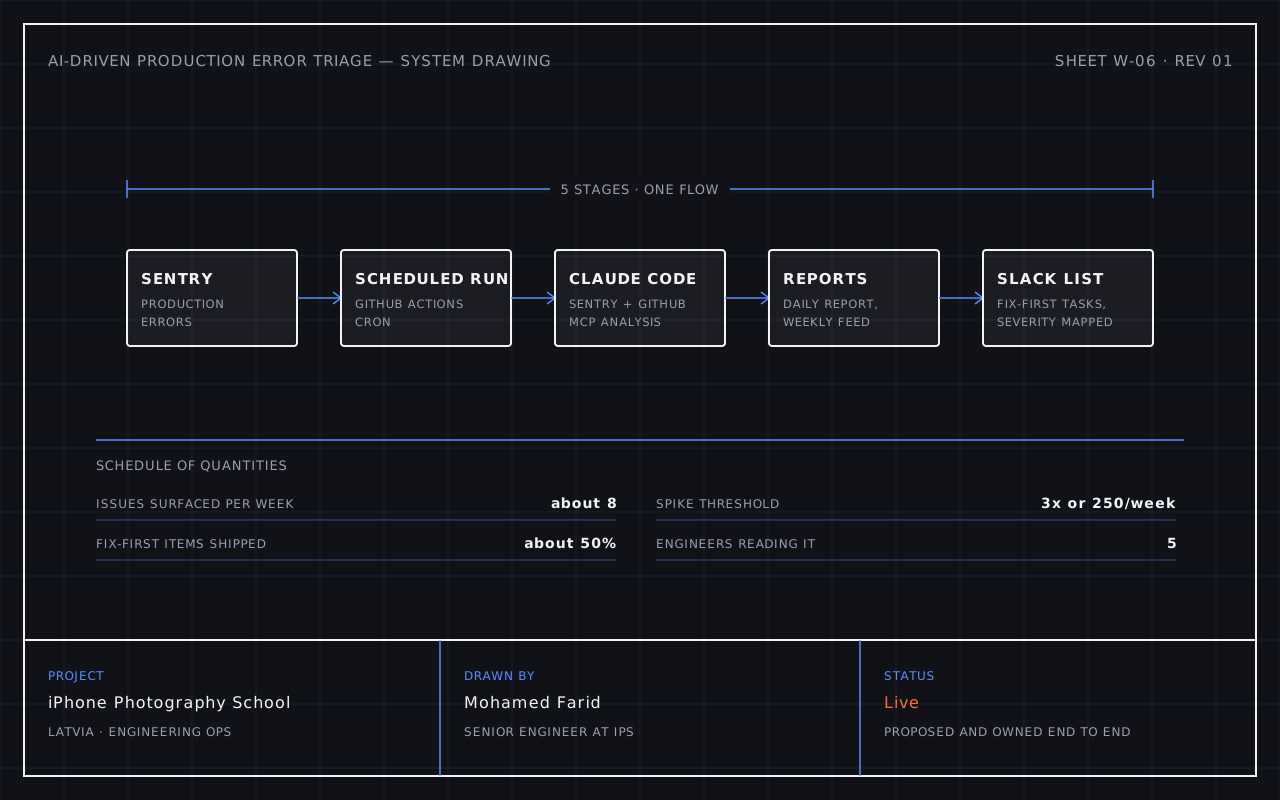
A weekly GitHub Actions job runs Claude Code with the Sentry and GitHub MCP servers: it reads the errors, reads the code around them, and writes a ranked engineering work feed instead of a list of stack traces.
Spike detection tuned on real history
Thresholds calibrated against past incidents, including a three-times spike rule and a volume threshold of 250 a week, so the pipeline stays quiet when nothing is wrong and speaks up when something is.
A daily report with different semantics
A separate daily run answers a different question from the weekly one, deliberately without filing tasks, so the team is not buried in daily noise.
Tasks filed where the team works
Severity-mapped Fix-First tasks are written straight into a Slack list. Detection and action sit in the same loop instead of in two different tools.
Screens
How we worked
Our founder proposed this initiative and owned it end to end: architecture, prompts, thresholds and the Slack action loop. The pipeline surfaced the signup-abuse wave that hit the platform, about 120,000 fake signups in six hours, and mitigation was shipped within an hour of detection.
Results
issues surfaced per week
Ranked, with severity attached.
of Fix-First items shipped
Consumed by a five-engineer team.
Issues that used to sit unnoticed for days are now surfaced daily
Qualitative: the change in response time was clear, the before and after was not measured.
What's next
The same pattern applies to any recurring sweep: read the real system on a schedule, rank it, file it where people already work.